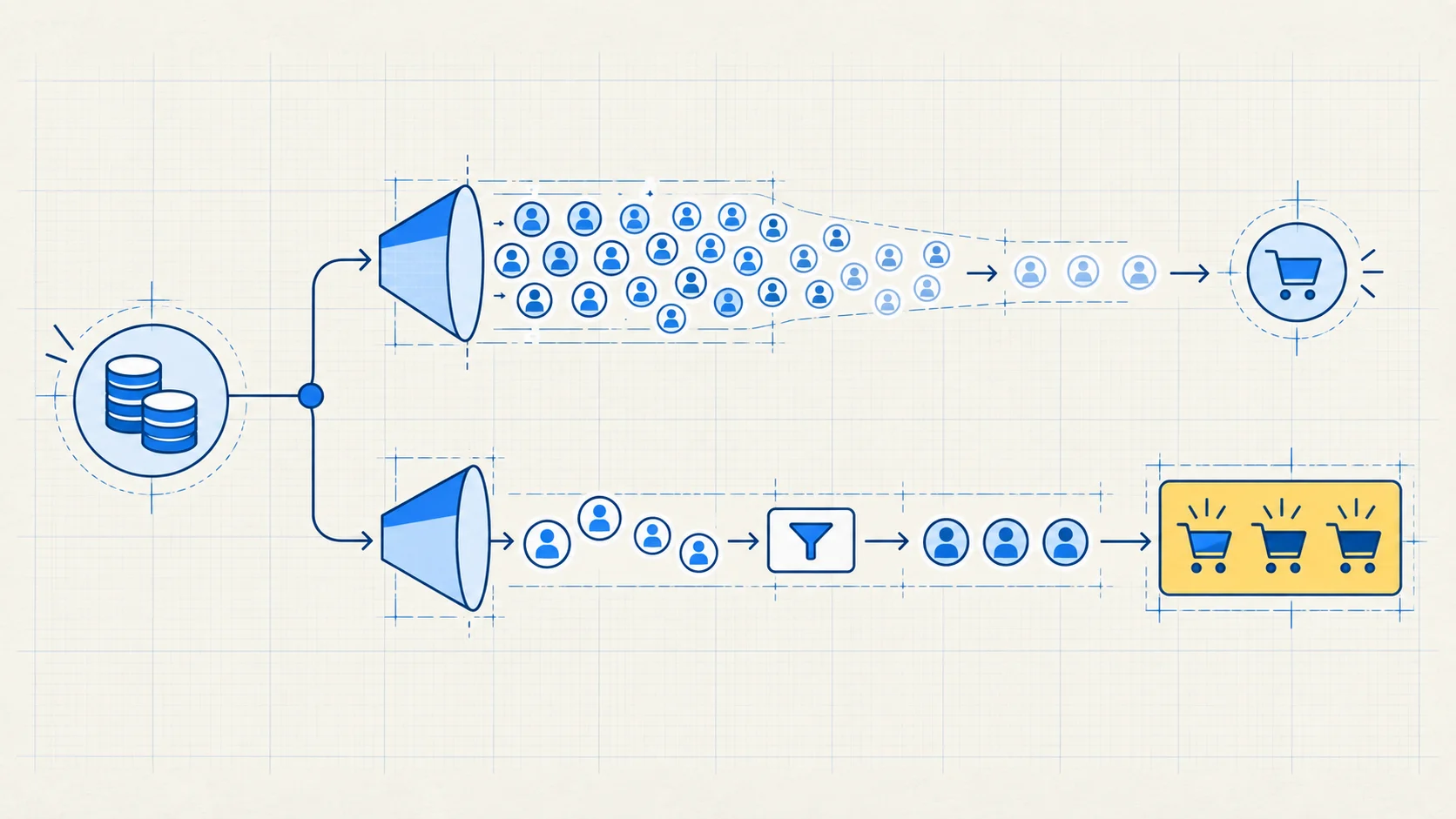

Before you write an ad, listen to real customers.
Do not collect only praise. Look at people who bought, people who said no, people who did not attend and people who were not a good fit.
Keep their exact words separate from your own opinion.
Build a simple customer language record
You do not need a large research system. A spreadsheet is enough.
Create one row for each useful comment.
| Field | What to save |
|---|---|
| Exact words | What the person said or wrote |
| Result | Bought, lost, no-show or poor fit |
| Situation | What was happening in the business |
| Topic | Goal, problem, failed attempt or concern |
| Source | Call, email, form or message |
| Date | When you collected it |
| Your view | What you think the words may mean |
| Seen again? | Whether another person said something similar |
Save enough detail to find the original source later.
Separate facts from your opinion
This is the most important rule.
A customer may say:
We get enquiries, but nobody knows who should reply.
That is a fact. It is what the customer said.
You may write:
This may be an ownership problem.
That is your opinion. It may be right, but you still need to check it.
Another cause could be a broken alert, staff availability or an unclear process.
Keep both notes. Do not present your opinion as the customer’s own conclusion.
Compare different results
Review comments in four groups.
Customers who bought
What problem did they recognise? What result did they want? What work were they willing to do?
Customers who did not buy
What stopped them? They may have chosen another option, had no urgency or decided to wait.
People who did not attend
Was the next step clear? Did it ask for more time or effort than the ad suggested?
People who were not a good fit
Write down the exact mismatch. Avoid labels such as “bad lead”. Did they want a service you do not offer? Did they expect a different process? Was nobody able to support the work?
Find useful patterns
One strong comment is not a pattern. Repeated words can be worth testing, but they do not prove why someone bought.
Before writing the ad, ask:
- Which situation appears more than once?
- Which exact words describe it clearly?
- Did those words appear in successful and unsuccessful enquiries?
- What opinion have you added?
- What still needs to be checked?
Use this guide:
| What you find | What to do next |
|---|---|
| The same situation appears several times | Write an ad about that situation and test it. |
| The same words appear with mixed results | Use the words, but do not treat them as proof of fit. |
| Only one person said it | Save the note and collect more evidence. |
| You only have team summaries | Go back to the original calls or messages. |
| You have no useful customer words | Speak to a few customers before writing a broad claim. |
Use the record, not every quote
Your ad does not need every phrase you collected. It needs one clear and honest situation that the right reader can recognise.
This record helps you avoid two mistakes:
- using only positive comments; and
- confusing your opinion with the customer’s words.
I have spent thousands of hours learning marketing. Scale Manual turns that work into practical steps you can use to build a lead system you understand and control.