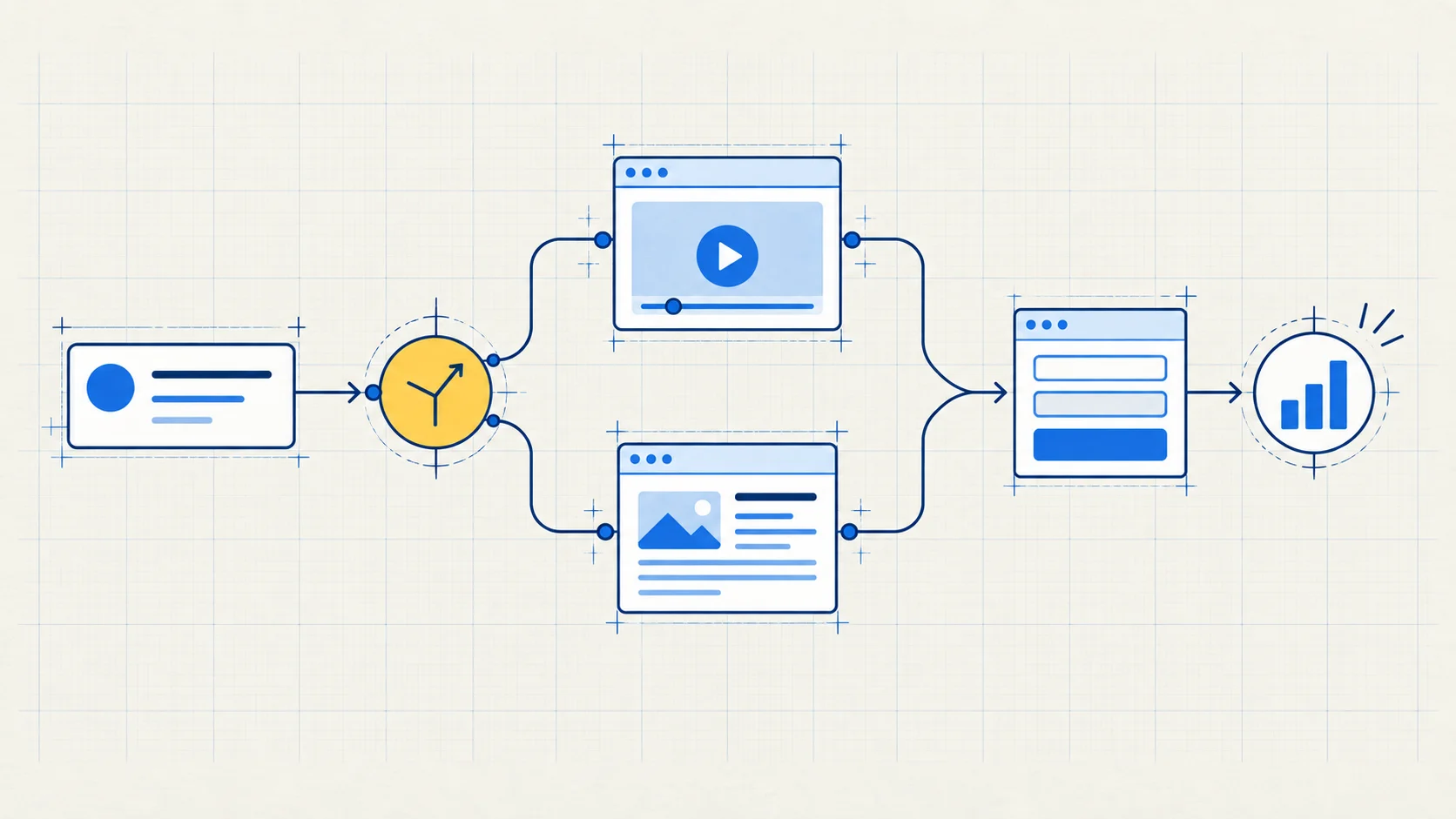
A landing page is not always better than a website. A homepage is not always easier.
Choose the page that continues the promise in the ad and helps the visitor take the next step.
Keep the journey clear
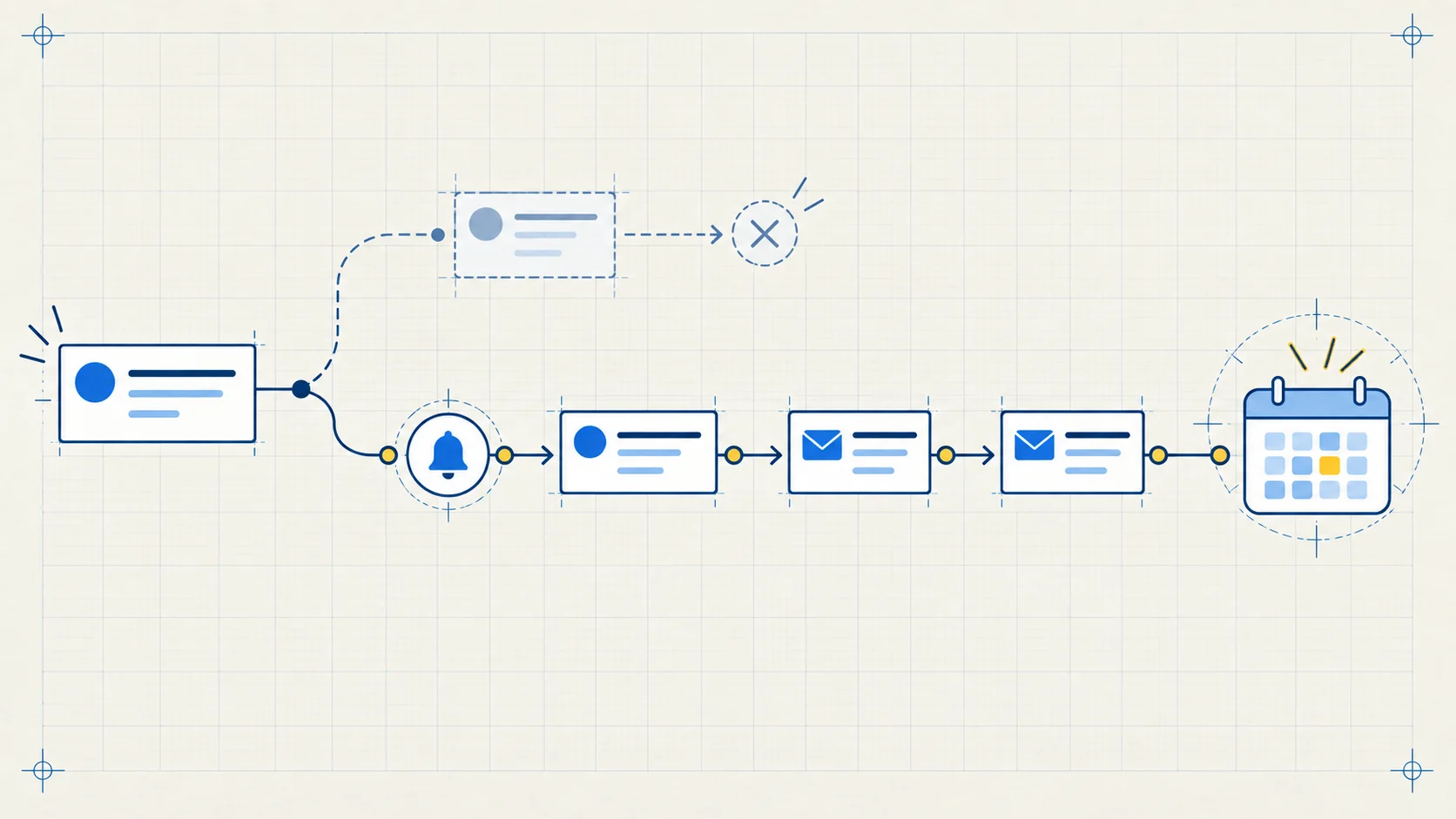
Think about the full path:
Ad → page → form → alert → reply → booking
The page is only one part of this path. A good page still fails if nobody receives the form or owns the reply.
First check where people stop. Do not rebuild the page if the real problem happens after the form.
Use a landing page for one clear offer
A landing page is useful when:
- the ad is for one type of customer;
- the ad promotes one offer;
- there is one main action;
- the page can answer the main questions; and
- someone owns the follow-up.
For example, an ad may speak to owners whose enquiries are spread across an inbox, spreadsheet and customer system. A landing page can stay focused on that problem.
Sending the visitor to a general homepage may make them search for the right service.
Use a website page when people need more context
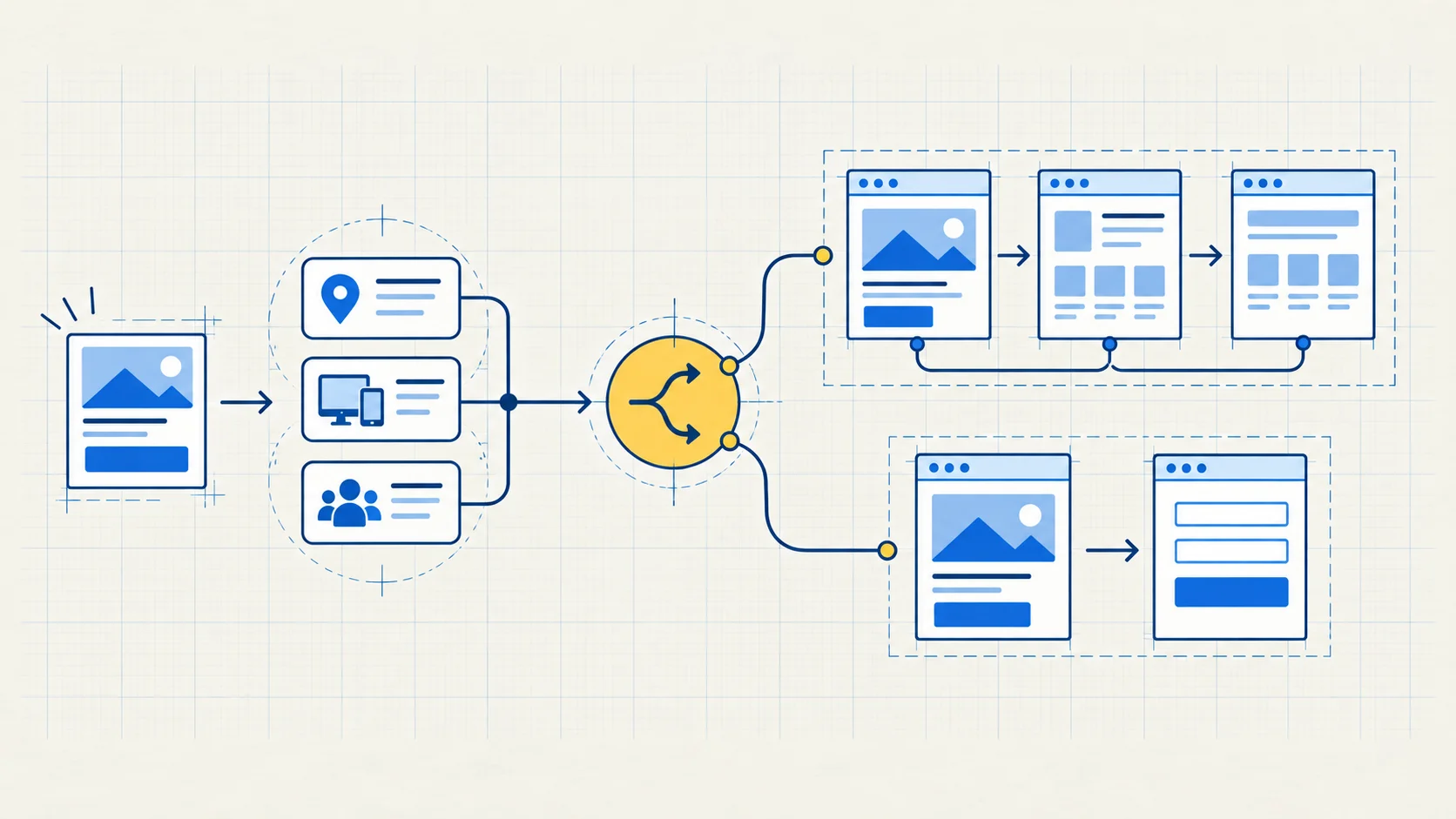
A website page may be better when visitors need to:
- compare several services;
- understand how your business works;
- check whether you cover their situation;
- read more before contacting you; or
- choose between several clear paths.
This does not mean every ad should go to your homepage. A service page may give the right context while keeping the ad message clear.
Compare the ad and the page
Read them together.
| Check | Ask this question |
|---|---|
| Customer | Does the page speak to the same person as the ad? |
| Problem | Does it continue the same problem? |
| Offer | Is the offer the same? |
| Proof | Does the page support its claims honestly? |
| Action | Is the next step clear? |
| Form | Does every question have a useful purpose? |
| Follow-up | Does one person receive and handle the enquiry? |
Fix the first answer that is not clear.
Test the page without changing everything
If you want to compare two pages, write one question first:
Does a focused service page bring more suitable enquiries than our homepage?
Keep the ad, offer, form and follow-up the same. Change only the destination.
Measure suitable enquiries or completed bookings. Do not judge the test by clicks alone.
Record what changed, what stayed the same and what happened after the click.
The simple answer
Use a landing page when one audience needs one offer and one next step.
Use a website or service page when people need real choice or more information.
Fix follow-up first when the page already creates enquiries but your team does not handle them well.
I have spent thousands of hours learning marketing. Scale Manual turns that work into practical steps you can use to build a lead system you understand and control.